Aura
The name given to a subtle envelope of vital energy which apparently radiates around natural objects, including human beings, animals and plants. It is described as a cloud of light suffused with various colors and, in human beings, it chiefly surrounds the head. The colors and form of each aura are believed to be characteristic of the person, animal or thing it surrounds and to change according to a particular state of mind or emotion.
The aura is invisible to physical sight, but is seen by clairvoyants as a halo of light, although not all of them describe the auras of similar objects or people in the same way.
Although the body does have a magnetic field — a bio-field — it is far too weak to account for a light-emitting halo of energy and, aside from the accounts of clairvoyants, there is no scientific evidence that the phenomenon exists.
Belief in the emanation of vital energy from the body was present in ancient Egypt, India, Greece and Rome. Some authorities trace the existence of the aura in such scriptural instances as the bright light shining about Moses, which the children of Israel were unable to look upon, when he descended from the mountain bearing the stone tablets engraved with the Ten Commandments. In many of the sacred books of the East, representations of the great teachers and holy men are given with a halo of light extending round the whole of the body. In the sixteenth century Paracelsus discoursed on the astral body and its 'fiery' aura — "the vital force is not enclosed in man, but radiates round him like a luminous sphere, and it may be made to act at a distance;" the theory of animal magnetism advanced in the late eighteenth century by Franz Anton Mesmer provoked a variety of scientific experiments to try to isolate and identify the phenomena.
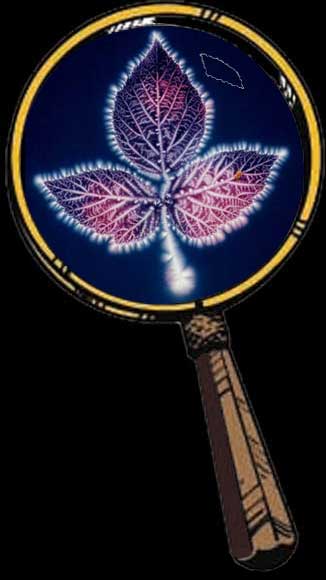
In the years before World War I, Dr. Walter Kilner at St. Thomas's Hospital in London developed a method of viewing auras, which he declared could be seen as a faint haze around the body, using an apparatus which rendered ultraviolet light visible. He developed a theory of auric diagnosis of illness, from his observations of the correspondence between the appearance of the aura and patient health. Kilner's work was greeted with skepticism by the medical profession, and his work was interrupted by the onset of World War I. In 1939 Semyon Davidovich Kirlian, a Russian electrician, developed a technique which he claimed recorded the aura on film, but this technique remains controversial.
 | | | | |
| | |
| |
See Out-of-body Experience, Kirlian Photography, Astral Plane, Franz Anton Mesmer, Paracelsus, Astral Projection, Apparition, Altered State of Consciousness, ESP, Seance, Materialization, British Society for Psychical Research, Asport, Rappings, Automatic Writing, Findhorn, Glastonbury Scripts, Theosophy, Psychic Archaeology, Spiritualism, Poltergeist, Ghost, Parapsychology, Mystic Gifts and Charms - New Age Gift Shop & Wicca and Pagan Supplies, Love Spells -- Use these powerful love spells to help you find and keep your true love, The Tarot Store, Divination & Scrying Tools and Supplies, Unique Amulets, Talismans, Good Luck Charms, and Love Tokens, Powerful Witch Doctor Spell Kits, Powerful Spells - Cast by Andreika the Witch, Webmasters Make $$$, AzureGreen - Celebrating All Paths to the Divine, ISIS - Tools for Your Soul's Journey, and The Pyramid Collection - Myth, Magick, Fantasy and Romance.
Sources: (1) Spence, Lewis, An Encyclopedia of Occultism, Carol Publishing Group; (2) Dictionary of the Occult, Caxton Publishing; (3) Muldoon, Sylvan Joseph and Carrington, Hereward, Projection of the Astral Body, Kessinger Publishing.
| | |