Theosophy
A term derived from the Greek theos ('god') and sophia ('wisdom') which means wisdom of or about God, referring to a philosophical religious system which claims absolute knowledge of the existence and nature of the deity, and is not to be confounded with the later system evolved by the founders of the Theosophical Society. This knowledge, it is claimed, may be obtained by special individual revelation, or through the operation of some higher faculty.
In a general sense, theosophy refers to a broad spectrum of occult or mystical philosophies, often pantheistic in nature; i.e., a religious philosophy or speculation about the nature of the soul based on mystical and occult insights into the nature of God. One could say that Theosophy is practically another name for speculative mysticism.
The Western theosophical tradition may be said to be derived from the hermetic tradition of the Renaissance and post-Renaissance and is characterized by an emphasis on the hidden tradition passed down in a succession from the ancients. This tradition is thought to provide a key to nature and to humanity's place in the universe.
Theosophy has also come to signify the tenets and teachings of the founders of a religious sect, the Theosophical Society, its offshoots, and the doctrines held by its members. The Society is an esoteric blend of Buddhism, Brahmanism, Zoroastrianism, Hinduism, Gnosticism, Manichaeism, the Kabbalah, and the philosophy of Plato and other mystics, combined with the teachings of mysterious masters who dwell in secret places in the Himalayas and communicate with their initiates through their psychic abilities and their projected astral bodies.
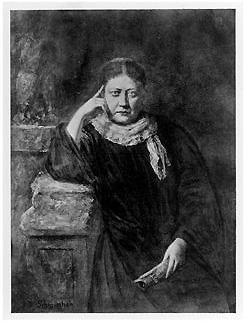
The most important early figure in the movement was Helena Petrovna Blavatsky, who, along with Colonel Henry Steel Olcott (1832-1907) and William Q. Judge (1851-96), founded the society in New York City in 1875. In numerous works, including Isis Unveiled (1877) and The Secret Doctrine (1888), Blavatsky elaborated an amalgamation of previous theories that were claimed to be derived from the mahatmas of ancient India.
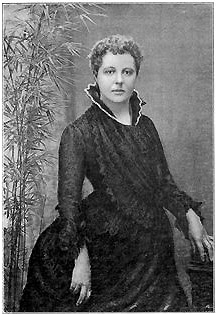
The Theosophical Society grew rapidly in Europe and the United States, its two most influential adherents being Annie Besant and Rudolf Steiner. According to Madame Blavatsky, the doctrines of theosophy rest on three fundamental propositions. The first postulates an omnipresent, boundless, and immutable principle that transcends human understanding. It is the one unchanging reality, or infinite potentiality, inherent in all life and covers all that humans have tried to say about God. The second deals with the universality of the law of periodicity recorded by science as found in all nature. As morning, noon, and night are succeeded by morning again, so birth, youth, adulthood, and death are succeeded by rebirth. Reincarnation is the process of human development, in which all growth is governed by the law of justice or karma. The third proposition declares the fundamental identity of all souls with the universal Over-Soul, suggesting that brotherhood is a fact in nature, and the obligatory pilgrimage for every soul through numerous cycles of incarnation. Theosophy admits of no privileges or special gifts in humans except those won by effort and merit. Perfected individuals and great teachers, such as Buddha, Jesus, and the mahatmas, are universal beings, the flower of evolution.
After the death of Madame Blavatsky in 1891, a battle for leadership of the society ensued, from which Annie Besant emerged as leader in Europe and Asia, whereas W. Q. Judge led a secessionist movement in the United States. Under Besant, the society flourished. In 1911 she put forward a young Indian, Jiddu Krishnamurti, as a World Teacher, around whom she founded the Order of the Star of India. This action seems to have provoked Steiner, who, with a large number of followers, left to found the Anthroposophical Society. The various divisions and subdivisions have continued since that time and have influenced numerous literary and intellectual figures. The groups continue to carry on active meetings.
See Annie Besant, Helena Petrovna Blavatsky, The Chakra Store, Mystic Gifts and Charms - New Age Gift Shop & Wicca and Pagan Supplies, Love Spells -- Use these powerful love spells to help you find and keep your true love, The Tarot Store, Divination & Scrying Tools and Supplies, Unique Amulets, Talismans, Good Luck Charms, and Love Tokens, Powerful Witch Doctor Spell Kits, Powerful Spells - Cast by Andreika the Witch, Webmasters Make $$$, AzureGreen - Celebrating All Paths to the Divine, ISIS - Tools for Your Soul's Journey, and The Pyramid Collection - Myth, Magick, Fantasy and Romance.
Sources: (1) Shepard, Leslie (editor), Encyclopedia of Occultism and Parapsychology, Thomson Gale; (2) Dictionary of the Occult, Caxton Publishing; (3) Steiger, Brad and Sherry Hansen, The Gale Encyclopedia of the Unusual and Unexplained, Thomson Gale.
| | |








 .
.








 Change Your Life!