| | | | |
Druids
Members of the ancient pre-Christian Celtic priestcraft of Britain and Gaul, a secret order about which almost nothing is known. The term 'druid' means 'knowing the oak tree' in Gaelic; the oak tree was sacred to the Celts.
The Romans tell us that the Druids were magicians, but the nature of their magic is unknown. The Romans also tell us that they believed in the transmigration of souls (which may have been reincarnation). They are said to have conducted their cult practices in sacred oak groves, where one of their chief rites was harvesting mistletoe using a golden sickle. They are also thought to have offered human sacrifices. It is probable that they were the representatives of the ancient Nordic and Christian Mysteries.
The theory that the Druids built Stonehenge or Avebury, advanced by some antiquarians in the 17th and 18th centuries, has been proved by modern archaeological techniques to be false.
Many of the ancient magical spells used among the Druids survived until a comparatively late period — the names of saints being substituted for those of Celtic deities. In pronouncing incantations, the usual method employed was to stand upon one leg and point with the forefinger to the person or object on which the spell was to be laid, at the same time closing an eye, as if to concentrate the force of the entire personality upon that which was to be placed under the spell. All magic rites were accompanied by spells, and Druids often accompanied an army to assist by their magic in confounding the enemy.
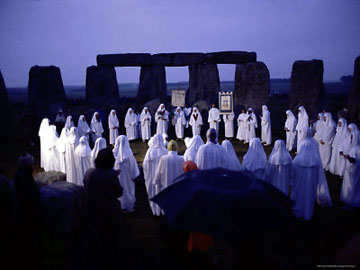
Various Druid groups flourish in Britain and the United States, but claim no connection with ancient Druids. They celebrate eight pagan festivals in outdoor henges and groves, the most important being the summer solstice. Since 1985 modern Druids have been prevented from gathering at Stonehenge for the solstice, due to vandalism by spectators. American druids use a replica of Stonehenge in Washington State.
See Celts, Mystic Gifts and Charms - New Age Gift Shop & Wicca and Pagan Supplies, Love Spells -- Use these powerful love spells to help you find and keep your true love, The Tarot Store, Divination & Scrying Tools and Supplies, Unique Amulets, Talismans, Good Luck Charms, and Love Tokens, Powerful Witch Doctor Spell Kits, Powerful Spells - Cast by Andreika the Witch, Webmasters Make $$$, AzureGreen - Celebrating All Paths to the Divine, ISIS - Tools for Your Soul's Journey, and The Pyramid Collection - Myth, Magick, Fantasy and Romance.
Sources: (1) Shepard, Leslie (editor), Encyclopedia of Occultism and Parapsychology, Thomson Gale; (2) Dictionary of the Occult, Caxton Publishing; (3) Steiger, Brad and Sherry Hansen, The Gale Encyclopedia of the Unusual and Unexplained, Thomson Gale.
| | |
 |
|
|
|
|
Suggested Software:
|
 |
|
Courses on Alternative Beliefs:
|
|
--
Ancient Civilizations 4 CD-ROM Set.
--
Ancient Medieval History CD-ROM.
--
Ancient Times CD-Rom.
--
Breaking the Rosetta Stone Code CD-ROM.
--
Discovering Egypt 4 CD-ROM Set.
--
Dream Interpreter CD-ROM: Spiritual, Psychological and
Traditional Interpretations of Dreams.
--
Egyptian Hieroglyphs Made Easy
CD-ROM.
--
Elementary World History - Explore Egypt CD-ROM.
--
Mysterious Egypt 3 CD-ROM Set.
--
Tutankhamun (King Tut) Interactive Egypt Educational Entertainment CD-ROM.
--
Ultimate
Divination 4 CD-ROM Set: Astrology, Tarot, Palmistry, I Ching.
--
Wonders of the Ancient World CD-ROM.
-- Click
HERE for more
related software.
-- Click
HERE for the best prices on
top-selling software titles.
--
5000 Years of Magnificent Wonders: Ancient Egypt DVD.
--
7 Wonders Of The Ancient World (DVD).
--
Ancient Civilizations 6 DVDs Set.
--
Castle
Ghosts of England.
--
Celts.
--
Druids.
--
English
Ghosts/Hollywood Hauntings.
--
Ghosts & Witches of Olde England DVD.
--
Ghosts of England & Belgrave
Hall.
--
Guardian
of the Ages: The Great Sphinx.
--
Hollywood Ghosts and
Gravesites.
--
IMAX:
Mysteries of Egypt.
--
In Search of Ancient Ireland DVD.
--
Karnak
- Temple of the Gods.
--
Lost Treasures of the Ancient World, Volume 3 [DVD Boxed Set]: Ancient China, Ancient India, Samurai Japan, Empires In The Americas, Dark Age England, The Celts.
--
Sex and the Celts DVD.
--
The Celts.
--
The Celts: A Journey Back in Time DVD (Lost Treasures of the Ancient World).
--
The Celts - Rich Traditions & Ancient Myths DVD.
--
Unexplained - Hauntings
DVD.
--
Unsolved Mysteries: Ghosts - DVD.
-- Click
HERE for
more related
videos.
-- Click
HERE for the best prices on
top-selling DVD titles. |
|
|
--
Ancient Civilizations (World History Part 1).
--
Creating the Life You Want with Self Hypnosis.
--
Chakra Meditation 101.
--
Auras: Viewing, Identifying, and Understanding.
--
Paranormal Investigations: Complete Edition.
--
Understanding Parapsychology and the Paranormal.
--
Introduction to Paganism . .
--
Magick Basics . .
--
Wicca 101 . .
--
Wicca Witchcraft & Magick: The Essentials . .
--
Click
HERE for more
new age and alternative beliefs courses . .
Suggested Art prints and Posters:
| |
|
|
|
|


Ancient Celts or Gauls Sacrificing a Cow, circa 1800-18
Giclee Print
Raineri, Vittorio
Buy
this Art Print |
|
|

Ancient Celts or Gauls in Battle, circa 1800-18
Giclee Print
Raineri, Vittorio
Buy
this Art Print |
|
| |
|
|
|
|

Druids at...
Adam Woolfitt
Buy This at Allposters.com |
|
|

Stonehenge, or a Circular Temple of the Druids, Plate 19 from "The History of the Nations"
Giclee Print
Buy
this Art Print |
|
|
|
|
|
|
|

The Sacred Grove...
Buy This at Allposters.com |
|
|

In a Forest Near Chartres France Druids Collect Mistletoe for Ritual Purposes
Giclee Print
Damblans, Eugene
Buy
this Art Print |
|
|
|
|
|
|
|

Human Sacrifice by a Gaulish Druid, from "Histoire De France" by L.P. Anquetil, 1851
Giclee Print
Philippoteaux,...
Buy
this Art Print |
|
|

Druids Sacrificing to the Sun in Their Temple Called Stonehenge
Giclee Print
Whittock,...
Buy
this Art Print |
|
|
|
|
|
|
|

Child is Sacrificed to the Druid Deity
Giclee Print
Boyd, Arthur
Buy
this Art Print |
|
|

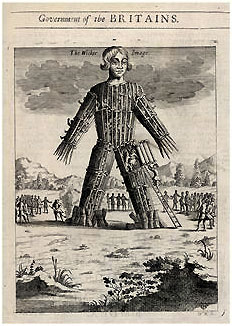
The Wicker Man in Which People were Burnt as Sacrifices to Their Deities
Giclee Print
Buy this Art Print |
|
| |
|
|
|
|
-- Click
HERE for more related
art prints and posters.
|
|
|
Suggested Books:
--
A Druid's Herbal
for the Sacred Earth Year.
--
Anam Cara: A Book of Celtic Wisdom.
--
Awen, the Quest of the Celtic Mysteries.
--
Brendan the
Navigator: A History Mystery About the Discovery of America.
--
By Oak, Ash &
Thorn: Modern Celtic Shamanism.
--
Celtic Bards,
Celtic Druids.
--
Celtic Druids.
--
Celtic Heritage: Ancient Tradition in Ireland and Wales.
--
Celtic Lore: The
History of the Druids and Their Timeless Traditions.
--
Celtic Magic
(Llewellyn's World Magic Series).
--
Celtic Myth & Legend: An A-Z of People and Places.
--
Celtic Myths (The Legendary Past).
--
Celtic Mythology: The Nature and Influence of Celtic Myth from Druidism to Arthurian Legend.
--
Celtic Traditions: Shamans, Druids, Faeries, and Wiccan Rituals.
--
Celtic Warriors (Shire
Archaeology).
--
Celtic Warriors: The Armies of One of the First Great Peoples in Europe.
--
Celtic Women in Legend, Myth, and History.
--
Clerics and
Druids.
--
Dictionary of Celtic Myth and Legend.
--
Drawing Down the
Moon: Witches, Druids, Goddess-Worshippers, and Other Pagans in America Today.
--
Druid-Shaman-Priest: Metaphors of Celtic Paganism.
--
Druids.
--
Druids: A
Beginner's Guide.
--
Druids: Gods
from Celtic Mythology.
--
Druids, Gods
& Heroes from Celtic Mythology (World Mythology Series).
--
Essential Celtic Mythology: Stories That Change the World.
--
Irish Druids and
Old Irish Religions.
--
Lives
and Legends of Saint Brendan the Voyager.
--
Navigatio Sancti
Brendani Abbatis: From Early Latin Manuscripts.
--
Omens, Oghams
& Oracles: Divination in the Druidic Tradition.
--
Spirits of the
Sacred Grove: The World of a Druid Priestess.
--
The 21 Lessons of
Merlyn: A Study in Druid Magic and Lore.
--
The Ancient Celts.
--
The Book of
Druidry: History, Sites and Wisdom.
--
The Celtic
Druids' Year: Seasonal Cycles of the Ancient Celts.
--
The Celts (Sacred Symbols).
--
The Celts: Conquerors of Ancient Europe (Discoveries).
--
The Druid Animal
Oracle: Working With the Sacred Animals of the Druid Tradition.
--
The Druid
Renaissance: The Voice of Druidry Today.
--
The Druid
Tradition ('Elements of ... ' Series).
--
The Druid Way.
--
The Druids (Nora
K. Chadwick).
--
The Druids (Paul
R. Lonigan).
--
The Druids (Peter
Berresford Ellis).
--
The Druids
(Ancient Peoples and Places Series).
--
The Druids:
Celtic Priests of Nature.
--
The
Emerald Sea: The Quest of Brendan the Navigator (Heroes of the Misty Isle Series).
--
The Handbook of
Celtic Astrology: The 13-Sign Lunar Zodiac of the Ancient Druids.
--
The History and
Origins of Druidism: A Long-Lost Classic Resurrected.
--
The Lost Books of
Merlyn: Druid Magic from the Age of Arthur.
--
The Sacred World of the Celts: An Illustrated Guide to Celtic Spirituality and
Mythology.
--
The Secret World
of Cults: From Ancient Druids to Heaven's Gate.
--
The Voyage of Saint Brendan.
--
The Voyage of
Saint Brendan: Sources and Analogues.
--
Thorsons
Principles of Druidry (Thorsons Principles).
--
Veil of Isis or
Mysteries of the Druids.
--
What Life Was
Like: Among Druids and High Kings: Celtic Ireland Ad 400-1200.
--
The World of the
Druids.
--
Click
HERE for more
Celts related
books.
--
Click
HERE for more
Druids related
books.
--
Click
HERE for more
Saint Brendan related
books.
--
Click
HERE
for
the best prices on
top-selling book titles. |
|
|
|
|
|
Occultopedia |
|
|
|
|
Unleash Your Inner Psychic!
Are You Ready to Find out How to Tap Into Your True Potential by Using Your Intuition and Natural Psychic Powers with a Proven, Step-by-Step System to Achieve Success in Your Career, Money, Love, Family, Relationships and Health? |
|
|
|
Divine Micro Economy
It seamlessly bridges economic science and religion using the subjectivist methodology of classical liberalism |
|
|
|
Gypsyadvice - Advice For Life!
Psychic & Spiritual Advice - Tarot, Rune, Numerology, Spirit Guides, Angels, Workshops, Classes. Free - Ask Allie Advice |
|
|
|
Sun Gazing 101: Living On Light
Sungazing EBook - Ancient Secrets Revealed For Increased Health, Longevity, And Spiritual Well-Being! |
|
|
|
|
Bell, Book & Candle
Pagan, Wiccan, Metaphysical and Occult Supplies. |
|
|
|
|
|

| |
|
|
This website is best viewed with the latest
versions of
Microsoft
Internet Explorer or
Firefox.
Occultopedia
makes extensive use of
Flash and Scripting in its pages and interface. Make certain your browser
permissions are set
accordingly and that you have the latest
Flash plug-in for the full experience, proper look and accurate
layout. You can do it with confidence. This site does not contain any viruses, malicious software
or scripts.
|
|
|
|

|
| |
|
Occultopedia is the genuine article, the
original and the best internet index of the extraordinary and uncanny,
shamelessly copied by many, but never equaled. Online since 1995 — at first in a free web space provider
(Tripod.com), and in 1997 finally
with its own domain name and hosting — Occultopedia still is the
principal online resource for those looking for the unexplained, the
curious and the unusual. |
|
Occultopedia respects your privacy. As
such, no cookies or any other tracking software will be installed as a
part of this website's original programming. I do not seek to obtain any personal information
beyond what is volunteered through electronic communications
(e.g. emails & forms).
|
|
|
| |
|
|
Occultopedia may appear to be a for profit site, but my site is
not in reality a commercial one. All of the commercial links are from affiliate
programs, and the little revenue I get from these is to pay for hosting,
bandwidth — that can be quite costly if you have a lot of traffic, graphics and
pages — and any other expenses related to Occultopedia's upkeep, support, and maintenance.
For more details, visit my
ordering
information page.
Occultopedia is a
FREE online
resource available to the whole world. Usage of my word definitions and articles
by educational institutions, teachers and students alike, is here by granted.
Reproduction for profit, and for display in another web site is strictly
forbidden, and will be handled as copyright infringement and prosecuted to the
full extent of the law. However, if you follow
some simple guidelines,
I will grant permission for limited reproduction. For more information, please consult my
intellectual property rights, warranties and
disclaimers information page. Support Occultopedia and make it your
online shopping
destination. If you prefer, you can also make a donation.
|
|
HELP FOOT THE BILL: this website
is created and maintained by one guy, who also pays the hosting bill.
Please donate if you like and/or use Occultopedia.
|
|
Participate in Occultopedia and submit a word
definition or article for the occult encyclopedia at my
entry submission
page. If you would like to suggest a web site or page for
addition into Occultopedia's links database, please go to my
URL submission page.
|
|
|
|

|
 Site
creation and design
by M. V. G. Site
creation and design
by M. V. G.
|
Copyright
© Occultopedia™ . All rights reserved. |
|
|











 Change Your Life!