Apocalypse
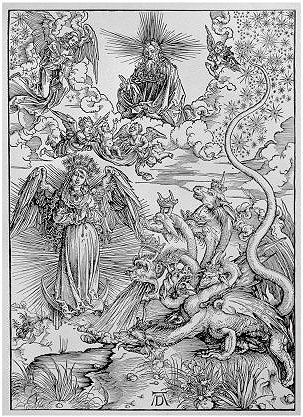
From the Greek apokalypto, for 'to reveal', it is the name given to the last book in the Bible. It is as well called the Book of Revelation. Also, any prophetic writing or utterance concerned with the end of the world and/or the Antichrist.
The Apocalypse is also equated with the mysterious number 666, the number of the beast, a mystical number of unknown meaning, but referring to some man mentioned by St John, possibly the Antichrist, the universal enemy of mankind, sent to scourge the world for its wickedness.
Our planet is in crisis as we start a new millennium. In a world rent by war, hunger, disease, poverty and crime, a better future seems beyond our grasp. An ancient apocalyptic theme assumed new prominence today: the accelerating destruction of the environment, possibly caused by humanity itself. Nuclear accidents, global warming, vanishing forests, oil spills, rapid desertification of vast areas of Africa, damage to the ozone layer, the greenhouse effect, the sighting of comets and meteors, the arrival of new plagues and the distortion of usual climatic patterns — all these bring to mind similar environmental events and motifs written about in the Bible.
The end of the world has always had a grim fascination for prophets and visionaries, which since time immemorial have elaborated in many different annihilation scenarios. However, most common folk see it in terms of either natural disasters like earthquakes, famine, plague, fire, flood, freezing, cosmic collisions, as a rule some type of ecological catastrophe, or a divine being punishing human kind for wrongs committed. Either way, the Apocalypse of St John is full of compelling references to this unpleasant end.
The Apocalypse of St John tells of the breaking of the seven seals. The first four seals unleashed the renowned four Horsemen of the Apocalypse, plague, famine, war and death (6:1-8). The fifth seal revealed martyrs and saints. The sixth seal disclosed natural and ecological disasters (6:12-9:2):
"And, lo, there was a great earthquake; and the sun became black as sackcloth of hair, and the moon became as blood."
The sky and sun every now and then show strange lighting effects before an earthquake, and the moon taking a bloody cast has always been deemed an omen as well as being a indicator of natural disaster.
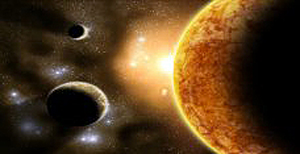
Perhaps a fall of great comets or meteors is implied in
"the stars of heaven fell unto the earth, even as a fig tree casteth her untimely figs, when she is shaken of a mighty 'wind' (6:13)".
The shaking might be suggestive of a wobbling of the Earth's axis, which is likely to be associated with the arrival of these destructive heavenly bodies.
| | |







 .
. .
.