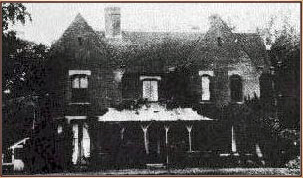
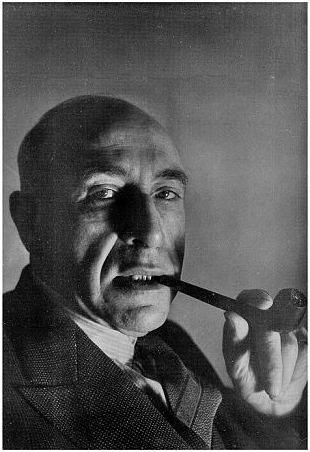
An unattractive Victorian brick building of many rambling rooms, damp, dark and uninviting, in the parish of Borley on the Essex-Suffolk border, made famous because of the violent controversy it stirred among modern psychical researchers, after Harry Price's "ghosthunting" investigations and his claim that it was "the most haunted house in England."
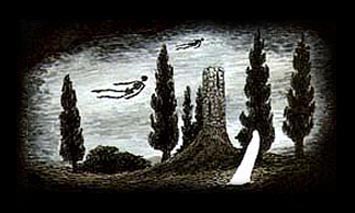
Local tales concerned a mysterious coach and horses which galloped along the roads; visions of headless men; a girl in white; sounds of dragging footsteps and other weird noises in the house. Above all, there was the apparition of a nun who occasionally walked the house and grounds.
The rectory was built in 1863 on the site of a much older building. In 1929, Mr. Price was asked by a national newspaper to look into the strange events which were occurring there. Mr. Price heard many of these stories from the Rev and Mrs. Eric Smith — who eventually left the house, partly because they could no longer stand the atmosphere there (their experiences included Mrs. Smith finding the skull of a young woman wrapped in brown paper in a cupboard).
Price concerned himself with the rectory for some years, particularly between 1930 and 1935, when it was occupied by the Rev Lionel Foyster and his wife Marianne. He saw keys shoot from their locks, heard bells ring (sometimes when he requested the spirits to ring them), had an empty bottle thrown at him, heard footsteps, saw materializations. He estimated that while the Foysters were in residence, at least 2, 000 poltergeist phenomena were observed at the rectory.
Leasing the building for a year, Price not only kept watch himself, but invited many interested people to visit the house, organizing a rota of 48 observers to occupy it day and night. In his book The End of Borley Rectory (1946) he lists 100 other people who noted improbable things.
Some of the experiences were distinctly worrying: while Mark Key-Pearse, a British proconsul at Geneva, was eating his evening meal in the rectory, "he heard the key in the lock turn. Something had locked him in. The extraordinary thing was that the key was on the inside of the door. Consequently, whatever locked him in remained in the room. " In February, 1939, the rectory was burned to the ground. Captain W. H. Gregory, who had bought it, had been sorting some books when a pile of them — which he was nowhere near — threw itself over, knocking over an oil lamp which set fire to the place. He had also been plagued by strange events.
A month after the fire two local ladies took some friends to the ruin — and all four saw a woman dressed in blue, walking in all upstairs room. As the room now had no floor, they regard this as unusual. For six more years, strange events continued to occur in the ruins.
The phenomena gradually ceased. Perhaps coincidentally, they died away after the burial, on May 29 1945, of the skull of a young woman which had been found below the floor of the cellar of the rectory. Interestingly, a dental surgeon reported that the condition of the jaw indicated severe infection which would have been responsible at best for toothache, and at worst persistent severe neuralgia. Many people who saw the ghostly nun reported that she looked pale, haggard and miserable, her face drawn, "as though she had been crying."
The ruins of the rectory were razed to the ground in 1944. The haunting spirits made one farewell gesture. Price made a final visit to the place with some friends. As one of them, a photographer for Life Magazine, was taking a photograph, a brick picked itself up and posed in midair, conveniently in front of a dark passage.
Marianne Foyster survived her husband, and later became an American citizen. In 1979 she gave an interview to two representatives of the British Society for Psychical Research in which she claimed that the Rev Foyster himself was largely responsible for the poltergeist activities at Borley, although she gave no detailed description of how they were counterfeited. She also agreed that a number of inexplicable events did occur, for which she could offer no explanation. And of course her explanations could not account for the phenomena observed by Mr. and Mrs. Smith, or by the many people who visited the rectory after she and her husband had left it.
This website is best viewed with the latest
versions of
Microsoft
Internet Explorer or
Firefox.
Occultopedia
makes extensive use of
Flash and Scripting in its pages and interface. Make certain your browser
permissions are set
accordingly and that you have the latest
Flash plug-in for the full experience, proper look and accurate
layout. You can do it with confidence. This site does not contain any viruses, malicious software
or scripts.
Occultopedia is the genuine article, the
original and the best internet index of the extraordinary and uncanny,
shamelessly copied by many, but never equaled. Online since 1995 — at first in a free web space provider
(Tripod.com), and in 1997 finally
with its own domain name and hosting — Occultopedia still is the
principal online resource for those looking for the unexplained, the
curious and the unusual.
Occultopedia respects your privacy. As
such, no cookies or any other tracking software will be installed as a
part of this website's original programming. I do not seek to obtain any personal information
beyond what is volunteered through electronic communications
(e.g. emails & forms).
Occultopedia may appear to be a for profit site, but my site is
not in reality a commercial one. All of the commercial links are from affiliate
programs, and the little revenue I get from these is to pay for hosting,
bandwidth — that can be quite costly if you have a lot of traffic, graphics and
pages — and any other expenses related to Occultopedia's upkeep, support, and maintenance.
For more details, visit my
ordering
information page.
Occultopedia is a
FREE online
resource available to the whole world. Usage of my word definitions and articles
by educational institutions, teachers and students alike, is here by granted.
Reproduction for profit, and for display in another web site is strictly
forbidden, and will be handled as copyright infringement and prosecuted to the
full extent of the law. However, if you follow
some simple guidelines,
I will grant permission for limited reproduction. For more information, please consult my
intellectual property rights, warranties and
disclaimers information page. Support Occultopedia and make it your
online shopping
destination. If you prefer, you can also make a donation.
HELP FOOT THE BILL: this website
is created and maintained by one guy, who also pays the hosting bill.
Please donate if you like and/or use Occultopedia.
Participate in Occultopedia and submit a word
definition or article for the occult encyclopedia at my
entry submission
page. If you would like to suggest a web site or page for
addition into Occultopedia's links database, please go to my
URL submission page.











 .
. .
.