Anabaptism
One of the radical movements of the Reformation of the 16th century that believed in the primacy of the Bible, that only adult baptism was valid as an external witness of the believer's personal covenant of inner faith, in the separation of church from state and that true Christians should not bear arms, use force, or hold government office, and also in the separation of believers from nonbelievers. The term "Anabaptist" originated from the practice of baptizing individuals who previously had been baptized, often as infants.
The Anabaptist movement arose out of the economic, social, political, and religious situation in early 16th century Europe. These include peasant unrest brought on by social and economic injustice, the rhetoric of the fiery German peasant leader Thomas Müntzer, the writings of Martin Luther and, especially, Andreas Karlstadt, and also the influence of late medieval mysticism and asceticism, as well as the dynamics of reform in specific monasteries.
Anabaptism began officially in Zollikon, near Zurich, on January 21, 1525, when Grebel, Mantz, George Blaurock, and others baptized each other on confession of faith, thus establishing a separatist congregation. This event, however, was preceded by debates with Zwingli and the Zurich city council, beginning in 1523, over the characteristics and nature of desired reforms.
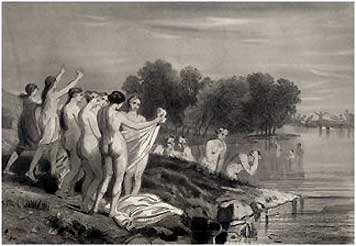
Anabaptists were consistently hunted down by the Täufenjager (baptist hunters) and executed, usually by drowning — sarcastically called the third baptism — and also as human torches. Just a few of the original Anabaptist leaders escaped this horrific fate.
See Agrippa, Pythagoras, Kabbalism, Numerology, Alchemy, Magic, Satan, The Tarot Store, The Chakra Store, Divination & Scrying Tools and Supplies, Unique Amulets, Talismans, Good Luck Charms, and Love Tokens, Powerful Witch Doctor Spell Kits, Powerful Spells - Cast by Andreika the Witch, Webmasters Make $$$, AzureGreen - Celebrating All Paths to the Divine, ISIS - Tools for Your Soul's Journey, and The Pyramid Collection - Myth, Magick, Fantasy and Romance.
Sources: (1) Jones, Lindsay (Editor), The Encyclopedia of Religion, MacMillan Reference Books; (2) Estep, William Roscoe, The Anabaptist Story: An Introduction to Sixteenth-Century Anabaptism, Wm. B. Eerdmans Publishing Company; (3) Gordon, Ronald J., Anabaptism in 16th Century Europe, April, 1998.
| | |













 .
. .
.