| | | | |
Mary Celeste
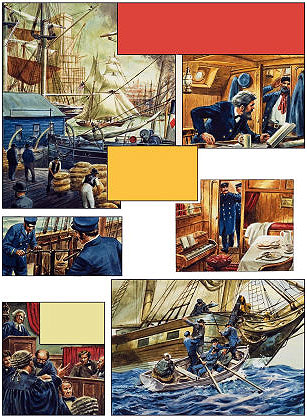
Ship found adrift on December 4, 1872 (some accounts say December 5), by the Dei Gratia, a bark sailing from New York to Gibraltar, and considered by many one of the most intriguing and enduring mysteries in the annals of maritime history.
| | | | | |  
| | | | | | | | | | | |
| |
When it was found, the Mary Celeste was sailing itself alone across the wide Atlantic. The ship was in first-class condition. Hull, masts, and sails were all sound. The cargo-barrels of alcohol were still lashed in place in the hold. There was plenty of food and water. When he examined the ship's log, the captain of the Dei Gratia found that the last entry was on November 24. That would have been 10 days earlier, when the Mary Celeste had been passing north of St. Mary's Island in the Azores — more than 400 miles west of where it was found. If it had been abandoned soon after that entry, the ship must have drifted unmanned and unsteered for a week and a half. Yet this could not have been. The Mary Celeste was found with its sails set to catch the wind coming over the starboard quarter: in other words, it was sailing on the starboard tack. The Dei Gratia had been following a similar course just behind. But throughout the 400 miles from the Azores, the Dei Gratia had been obligated to sail on the port tack. It seems impossible that the Mary Celeste could have reached the spot it did with its yards and sails set to starboard. Someone must have been working the ship for at least several days after the final log entry.
No one, from the 10 people that supposedly sailed aboard the Mary Celeste, including 7 crewmen and captain Benjamin Briggs' wife and daughter, was ever found.
| | |
 |
|
|
|
|
Suggested Software:
|
 |
|
Courses on New Age and Alternative Beliefs:
|
|
--
Explore Castles and Ships Fun Pack.
--
Russian Warships CD-ROM.
--
Ship Simulator.
--
The
Totally New Complete Edgar Cayce Readings CD-ROM.
--
The URANTIA Book
CD-ROM: The History of Earth.
-- Click
HERE for more
related software.
-- Click
HERE for the best prices on
top-selling software titles.
--
Battle of Hood and Bismarck DVD.
--
Bismarck: Germany From Blood and Iron DVD.
--
Disasters in America - Shipwrecks of the Great Lakes.
--
James Cameron's Expedition - Bismarck DVD.
--
National Geographic: Last Voyage of the Lusitania DVD.
--
National Geographic: The Search For the Battleship Bismark DVD.
--
NOVA: Sinking the Supership DVD.
--
Ocean of Fear - WWII USS Indianapolis
Sunk By Japanese: 900 Sailers in the Water 4 Days Attacked By Sharks DVD.
--
Sea Tales: Sinking of the Andrea Doria.
--
Secrets of the Dead: The Sinking of the Andrea Doria DVD.
--
Shipwreck! Fatal Collision Andrea Doria.
--
Sink the Bismarck! DVD.
--
Sinking of the Lusitania DVD.
--
SOS Catastrophe: Bel Air Fire & Andrea Doria.
--
The Collision of The Andrea Doria DVD.
--
The Mystery of the Marie Celeste DVD.
--
Times of Terror: Disasters at Sea DVD.
-- Click
HERE for
more related
videos.
-- Click
HERE for the best prices on
top-selling DVD titles. |
|
|
--
Angels 101 . .
--
Metaphysics 101 . .
--
Intermediate and Advanced Spiritual
Counseling.
--
Introduction to Dowsing - A Better Way of Life.
--
Flower Essences 101.
--
Haunted Places 101.
--
Understanding Parapsychology and the Paranormal.
--
Click
HERE for more
new age and alternative beliefs courses.
Suggested Art prints and Posters:
-- Click
HERE for more related
art prints and posters.
|
|
|
Suggested Books:
--
882 1/2 Amazing
Answers to Questions About the Titanic.
--
A Night to
Remember.
--
A Treasury of
Titanic Tales.
--
Alive on the Andrea Doria! The Greatest Sea Rescue in History.
--
Anatomy of the
Titanic.
--
Andrea Doria: Dive to an Era.
--
Battleship
Bismarck: A Survivor's Story.
--
Battleships of
the Bismarck Class: Bismarck and Tirpitz: Culmination and Finale of German Battleship
Construction.
--
Bismarck and His
Times.
--
Bismarck Chase:
New Light on a Famous Engagement.
--
Collision Course: The Classic Story of the Collision of the Andrea Doria and the Stockholm.
--
Deep, Dark, and Dangerous: Adventures and Reflections on the Andrea Doria.
--
Deep Descent: Adventure and Death Diving the Andrea Doria.
--
Deep-Sea
Explorer: The Story of Robert Ballard Discoverer of the Titanic.
--
Desperate Hours: The Epic
Story of the Rescue of the Andrea Doria.
--
Disasters in America - Shipwrecks of the
Great Lakes.
--
Discovery of the
Titanic: Exploring the Greatest of All Lost Ships.
--
Down With the Old
Canoe: A Cultural History of the Titanic Disaster.
--
Every Man for
Himself.
--
Exploring the
Bismarck.
--
Exploring the
Titanic.
--
Fatal Depth: Deep Sea Diving, China Fever, and the Wreck of the Andrea Doria.
--
Fatal Voyage: The Sinking of the Uss Indianapolis.
--
Finding the
Titanic.
--
Ghost
Fleet: The Sunken Ships of Bikini Atoll.
--
Ghost
Liners: Exploring the World's Greatest Lost Ships.
--
Ghost
Ships: True Stories of Nautical Nightmares, Hauntings, and Disasters.
--
Ghost
Ships, Gales and Forgotten Tales.
--
Her Name,
Titanic: The Untold Story of the Sinking and Finding of the Unsinkable Ship.
--
In Harm's Way: The Sinking of the U.S.S.
Indianapolis and the Extraordinary Story of Its Survivors.
--
In the Wake of the Andrea Doria.
--
Left for Dead: A Young Man's Search for
Justice for the USS Indianapolis.
--
Lighthouse
Adventures, Heroes Haunts & Havoc on the Great Lakes.
--
Lost
at Sea: Ghost Ships and Other Mysteries.
--
Lost Liners; From the Titanic to the Andrea Doria, the Ocean Floor
Reveals Its Greatest Lost Ships.
--
Lusitania.
--
Mission of the Shark: The Saga of the
U.S.S. Indianapolis.
--
Murder on the
Lusitania.
--
Mysteries
of the Deep.
--
Night Lives on:
The Untold Stories & Secrets Behind the Sinking of the Unsinkable Ship-Titanic.
--
On Board the
Titanic: What It Was Like When the Great Liner Sank.
--
Only 317 Survived! USS
Indianapolis (CA-35) Navy's Worst Tragedy at Sea. . . 880 Men Died.
--
Ordeal by the Sea: The
Tragedy of the U.S.S Indianapolis.
--
Out of the Fog: The Sinking of Andrea Doria.
--
Picture History of the Andrea Doria.
--
Report on the
Loss of the S.S. Titanic.
--
Robert Ballard's Lusitania: Probing the Mysteries of the Sinking That Changed History.
--
Saved! The Story of the Andrea Doria.
--
Ships
Gone Missing.
--
Shipwrecks
and Legends Round Cape May.
--
Sink the Bismarck: Germany's Super-Battleship of World War II (Military Might).
--
Sinking of the Andrea Doria.
--
Story of the
Titanic As Told by Its Survivors.
--
That Fateful
Night: True Stories of Titanic Survivors-In Their Own Words!.
--
The Battleship Bismarck (German Navy at War, Vol 3).
--
The Complete
Idiot's Guide to the Titanic.
--
The Complete
Titanic: From the Ship's Earliest Blueprints to the Epic Film.
--
The
Great Lakes Guide to Sunken Ships.
--
The Heroine of
the Titanic: A Tale Both True and Otherwise of the Life of Molly Brown.
--
The Last Days of
the Titanic: Photographs and Mementos of the Tragic Maiden Voyage.
--
The
Mary Celeste.
--
The Last Voyage
of the Lusitania.
--
The Lusitania:
Unravelling the Mysteries.
--
The
Lusitania: The Life, Loss, and Legacy of an Ocean Legend.
--
The Lusitania
Controversies - Book One: Atrocity of War and a Wreck-Diving History.
--
The Lusitania
Controversies - Book Two: Dangerous Descents into Shipwrecks.
--
The Last Voyage
of the Lusitania.
--
The
Mary Celeste: An Unsolved Mystery from History.
--
The
Shadow of the Mary Celeste.
--
The Sinking of
the Titanic.
--
The Sinking of
the Titanic: Eyewitness Accounts.
--
The
Story of the 'Mary Celeste'.
--
The Titanic
Disaster: As Reported in the British National Press April-July 1912.
--
The Titanic
Disaster Hearings: The Official Transcripts of the 1912 Senate Investigation.
--
The Titanic: End
of a Dream.
--
The Titanic
Sinks!
--
The Titanic: The
Extraordinary Story of the 'Unsinkable' Ship.
--
The Tragic Fate of the U.S.S.
Indianapolis: The U.S. Navy's Worst Disaster at Sea.
--
Titanic at Two
A.M..
--
Titanic:
Destination Disaster: The Legends and the Reality.
--
Titanic: James
Cameron's Illustrated Screenplay.
--
Titanic Legacy:
Disaster As Media Event and Myth.
--
Titanic: Safety,
Speed and Sacrifice.
--
Titanic: Sinking
the Myths.
--
Titanic Survivor:
The Newly Discovered Memoirs of Violet Jessop.
--
Titanic: The
Official Story: April 14-15, 1912.
--
Titanic: Triumph
and Tragedy.
--
Titanic Voices:
Memories from the Fateful Voyage.
--
Total Titanic:
The Most Up-To-Date Guide to the Disaster of the Century.
--
Warship Pictorial, No. 1; USS Indianapolis CA-35.
--
Click
HERE for more Andrea Doria related
books.
--
Click
HERE for more Battleship Bismark related
books.
--
Click
HERE for more Lusitania related
books.
--
Click
HERE for more Marie Celeste related
books.
--
Click
HERE for more Titanic related
books.
--
Click
HERE for more USS Indianapolis related
books.
--
Click
HERE for more disasters at sea related
books.
--
Click
HERE
for
the best prices on
top-selling book titles. |
|
| |

| |
|
|
This website is best viewed with the latest
versions of
Microsoft
Internet Explorer or
Firefox.
Occultopedia
makes extensive use of
Flash and Scripting in its pages and interface. Make certain your browser
permissions are set
accordingly and that you have the latest
Flash plug-in for the full experience, proper look and accurate
layout. You can do it with confidence. This site does not contain any viruses, malicious software
or scripts.
|
|
|
|

|
| |
|
Occultopedia is the genuine article, the
original and the best internet index of the extraordinary and uncanny,
shamelessly copied by many, but never equaled. Online since 1995 — at first in a free web space provider
(Tripod.com), and in 1997 finally
with its own domain name and hosting — Occultopedia still is the
principal online resource for those looking for the unexplained, the
curious and the unusual. |
|
Occultopedia respects your privacy. As
such, no cookies or any other tracking software will be installed as a
part of this website's original programming. I do not seek to obtain any personal information
beyond what is volunteered through electronic communications
(e.g. emails & forms).
|
|
|
| |
|
|
Occultopedia may appear to be a for profit site, but my site is
not in reality a commercial one. All of the commercial links are from affiliate
programs, and the little revenue I get from these is to pay for hosting,
bandwidth — that can be quite costly if you have a lot of traffic, graphics and
pages — and any other expenses related to Occultopedia's upkeep, support, and maintenance.
For more details, visit my
ordering
information page.
Occultopedia is a
FREE online
resource available to the whole world. Usage of my word definitions and articles
by educational institutions, teachers and students alike, is here by granted.
Reproduction for profit, and for display in another web site is strictly
forbidden, and will be handled as copyright infringement and prosecuted to the
full extent of the law. However, if you follow
some simple guidelines,
I will grant permission for limited reproduction. For more information, please consult my
intellectual property rights, warranties and
disclaimers information page. Support Occultopedia and make it your
online shopping
destination. If you prefer, you can also make a donation.
|
|
HELP FOOT THE BILL: this website
is created and maintained by one guy, who also pays the hosting bill.
Please donate if you like and/or use Occultopedia.
|
|
Participate in Occultopedia and submit a word
definition or article for the occult encyclopedia at my
entry submission
page. If you would like to suggest a web site or page for
addition into Occultopedia's links database, please go to my
URL submission page.
|
|
|
|

|
 Site
creation and design
by M. V. G. Site
creation and design
by M. V. G.
|
Copyright
© Occultopedia™ . All rights reserved. |
|
|






 Change Your Life!