| | | | |
Eclipse (Astronomy)
In astronomy, the total or partial obscuring of one heavenly body by another; a passing into the shadow of a heavenly body.
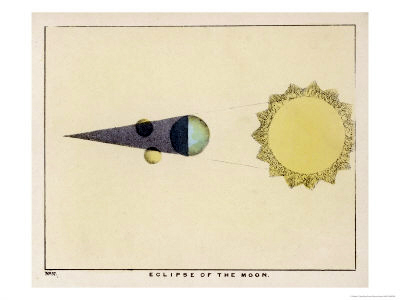
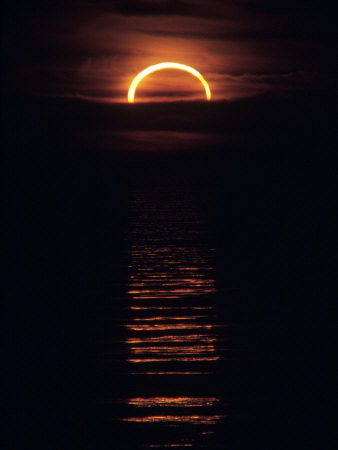
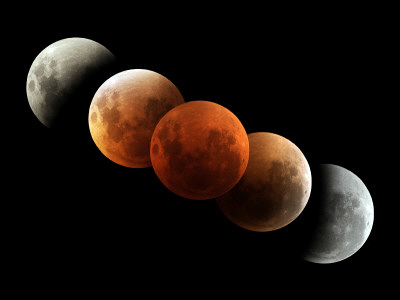
An eclipse of the moon occurs when the earth is between the moon and the sun, thus depriving the moon of the sun's light. An eclipse of the sun occurs when the moon is between the sun and the earth.
Man has always regarded the sun with awe and reverence, not only because it is seen to be the energy source of all life, but also because of its constancy and the inflexible reliability of the cycle of day and night. This diurnal cycle has been built into the evolutionary pattern of all living things so that they respond to sunset and sunrise as if remotely controlled by the sun itself. Sunset and dawn have become the natural regulators of our activities and rest periods. It is not surprising, therefore, that the sun should be treated with respect and even worshipped, because of the security that it inspires. It is because of the unfaltering cycle of the movement of the sun across the sky that we are peculiarly sensitive to any interruption that occurs.
In the days when solar eclipses were not understood, these phenomena were the cause of great alarm and were generally ascribed to supernatural agency. Among the Romans at one time it was even considered blasphemous and held to be a legal offense to speak openly of their being due to natural causes.
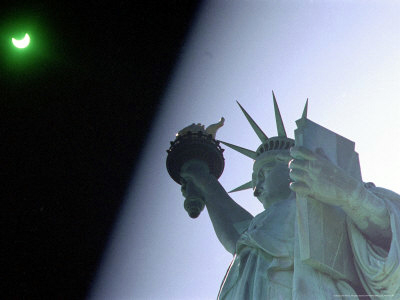
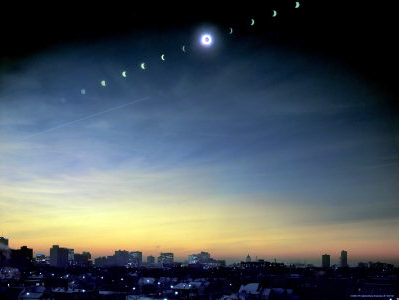
A total solar eclipse is indeed awe-inspiring even to experienced astronomers. The scene is set by the gradual weakening of the sunlight as the moon moves across the disc of the sun, even though the sky remains clear and blue. Just before the eclipse is total the shadow can be seen bearing down at a speed of about 2000 miles an hour and the air has become unusually still. As the darkness sweeps down there is an involuntary temptation to crouch and let the shadow pass; a glance at the sun reveals the crimson prominences, like huge angry flames embedded in the pearly light of the corona. One's attention is riveted on the magnificent spectacle until suddenly the sun reappears. Dawn is repeated in the space of a few seconds and the whole world seems to come to life again.
The earliest recorded eclipse seems to have been the one that took place on 22 October 2136 BC, which is referred to in the ancient Chinese classic the Chou King or Book of History. Eclipses must have been observed earlier than this for the story has it that the two official astronomers of the time were taken by surprise by this one, with the result that there was insufficient time to prepare the customary rites. The normal procedure was to beat drums and gongs, shoot arrows in the air, and make a general din with the intention of frightening away the monster that threatened to devour the sun. In spite of the fact that the sun recovered from this attack the two astronomers were executed for their negligence. There are many other cases of the use of various rites to ward off the threat to the sun.
One particularly interesting case in modern times is the one recorded in a letter to the Philadelphia Inquirer concerning the eclipse of 29 July 1878:
"It was the grandest sight I ever beheld but it frightened the Indians badly. Some of them threw themselves upon their knees and invoked the Divine blessing; others flung themselves flat on the ground, face downwards; others cried and yelled in frantic excitement and terror. Finally one old fellow stepped from the door of his lodge, pistol in hand, and fixing his eyes on the darkened sun, mumbled a few unintelligible words and raising his arm took direct aim at the luminary, fired off his pistol, and after throwing his arms about his head ins series of extraordinary gesticulations, retreated to his own quarters. As it happened, that very instant was the conclusion of totality."
Solar eclipses are usually very short and the total phase cannot last longer than eight minutes. It is this transient nature of the event that seems to promote the use of some sort of ritual. No sooner have the demonstrations begun than the monster moves away and the eclipse is over. Such highly 'effective' deterrents will obviously be remembered and used again if the occasion should arise.
| | |
|
|

|
|
|
Occultopedia |
|
|

|
|
Unleash Your Inner Psychic!
Are You Ready to Find out How to Tap Into Your True Potential by Using Your Intuition and Natural Psychic Powers with a Proven, Step-by-Step System to Achieve Success in Your Career, Money, Love, Family, Relationships and Health? |
|
|
|
Divine Micro Economy
It seamlessly bridges economic science and religion using the subjectivist methodology of classical liberalism |
|
|
|
Gypsyadvice - Advice For Life!
Psychic & Spiritual Advice - Tarot, Rune, Numerology, Spirit Guides, Angels, Workshops, Classes. Free - Ask Allie Advice |
|
|
|
Sun Gazing 101: Living On Light
Sungazing EBook - Ancient Secrets Revealed For Increased Health, Longevity, And Spiritual Well-Being! |
|
|
|
|
Bell, Book & Candle
Pagan, Wiccan, Metaphysical and Occult Supplies. |
|
|
|
|
|

| |
|
|
This website is best viewed with the latest
versions of
Microsoft
Internet Explorer or
Firefox.
Occultopedia
makes extensive use of
Flash and Scripting in its pages and interface. Make certain your browser
permissions are set
accordingly and that you have the latest
Flash plug-in for the full experience, proper look and accurate
layout. You can do it with confidence. This site does not contain any viruses, malicious software
or scripts.
|
|
|
|

|
| |
|
Occultopedia is the genuine article, the
original and the best internet index of the extraordinary and uncanny,
shamelessly copied by many, but never equaled. Online since 1995 — at first in a free web space provider
(Tripod.com), and in 1997 finally
with its own domain name and hosting — Occultopedia still is the
principal online resource for those looking for the unexplained, the
curious and the unusual. |
|
Occultopedia respects your privacy. As
such, no cookies or any other tracking software will be installed as a
part of this website's original programming. I do not seek to obtain any personal information
beyond what is volunteered through electronic communications
(e.g. emails & forms).
|
|
|
| |
|
|
Occultopedia may appear to be a for profit site, but my site is
not in reality a commercial one. All of the commercial links are from affiliate
programs, and the little revenue I get from these is to pay for hosting,
bandwidth — that can be quite costly if you have a lot of traffic, graphics and
pages — and any other expenses related to Occultopedia's upkeep, support, and maintenance.
For more details, visit my
ordering
information page.
Occultopedia is a
FREE online
resource available to the whole world. Usage of my word definitions and articles
by educational institutions, teachers and students alike, is here by granted.
Reproduction for profit, and for display in another web site is strictly
forbidden, and will be handled as copyright infringement and prosecuted to the
full extent of the law. However, if you follow
some simple guidelines,
I will grant permission for limited reproduction. For more information, please consult my
intellectual property rights, warranties and
disclaimers information page. Support Occultopedia and make it your
online shopping
destination. If you prefer, you can also make a donation.
|
|
HELP FOOT THE BILL: this website
is created and maintained by one guy, who also pays the hosting bill.
Please donate if you like and/or use Occultopedia.
|
|
Participate in Occultopedia and submit a word
definition or article for the occult encyclopedia at my
entry submission
page. If you would like to suggest a web site or page for
addition into Occultopedia's links database, please go to my
URL submission page.
|
|
|
|

|
 Site
creation and design
by M. V. G. Site
creation and design
by M. V. G.
|
Copyright
© Occultopedia™ . All rights reserved. |
|
|