Beelzebub
Alternatively Beelzebuth, Belzebuth, Baalzebub, Beelzeboul, Baalsebul, Belzaboul, Belzebud, Beezelbub, Beezlebub, Baalzebubg, Beelzebus, and Ba'al-zebub.
The name of a demon mentioned in the New Testament as chief of the demons (Matthew 12:24-27; Mark 3:22; Luke 11:15-18).
Beelzebub was also known as Achor by the Cyreneans, which probably meant 'Lord of the High House', referring to the Canaanite chief god 'Baal the prince'. This title could only properly apply to Solomon in his temple, so the Jews changed the name to Beelzebub which translates as 'Lord of Flies', possibly because of his supposedly role as creator and controller of the flies in the Philistine city of Ekron.
One of the oldest and most famous demonic figures, Beelzebub also had command over disease — flies congregate around the corpses of the dead, and spread disease from the dead to the living — and his role is to tempt men with pride. He was called the prince of devils by the Pharisees.
According to the apocryphal Gospel of Nicodemus, Jesus gave Beelzebub dominion over Hell in gratitude for helping remove Adam and other pre-Christian, unbaptized 'saints in prison' and bringing them to Heaven, over Satan's objections. In those early days, Satan outranked Beelzebub. By the sixteenth century, however, demonologist Johann Wierus was listing Beelzebub as supreme chieftain of Hell, with Satan below him.
Beelzebub appears several times in the New Testament, but only once in the Old Testament, and never in apocalyptic literature.
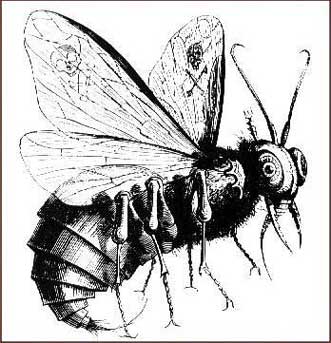
According to demonology's lore, when Satan first rebelled, he recruited several very powerful seraphim, Beelzebub among them, to fight at his side. Once he took up his new residence in Hell, Beelzebub learned to tempt men with pride. When summoned by witches or sorcerers, he appeared in the form of a fly, because "Lord of the Flies" was his nom de guerre, as it were. He'd acquired it by visiting a plague of flies upon the harvest of Canaan, or, perhaps, simply because flies were once believed to be generated in the flesh of decaying corpses. Another tale suggests that God created every creature, except the fly — which was made by the Devil.
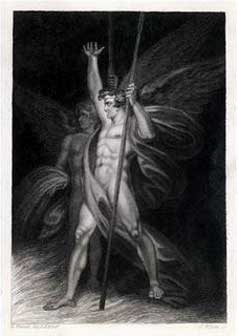
Beelzebub came to be regarded as the leading representative of the fallen gods, referred to as the Devil himself; in Matthew 12:24 he is mentioned as 'Prince of the Devils' and this appellation has stuck, even though Milton has him next in rank to Satan (Paradise Lost, I, 79).
| | |







 .
. .
. .
. .
.